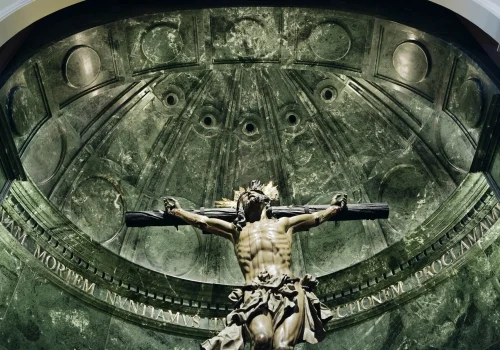
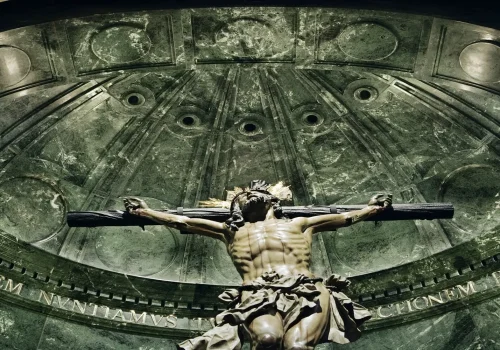
Covering of the altar of the Most Holy Christ of the Expiration commissioned by the Pontifical, Royal and Illustrious Brotherhood and Confraternity of Nazarenes of the Most Holy Christ of the Expiration and Our Mother and Lady of Patronage of Triana, Seville.
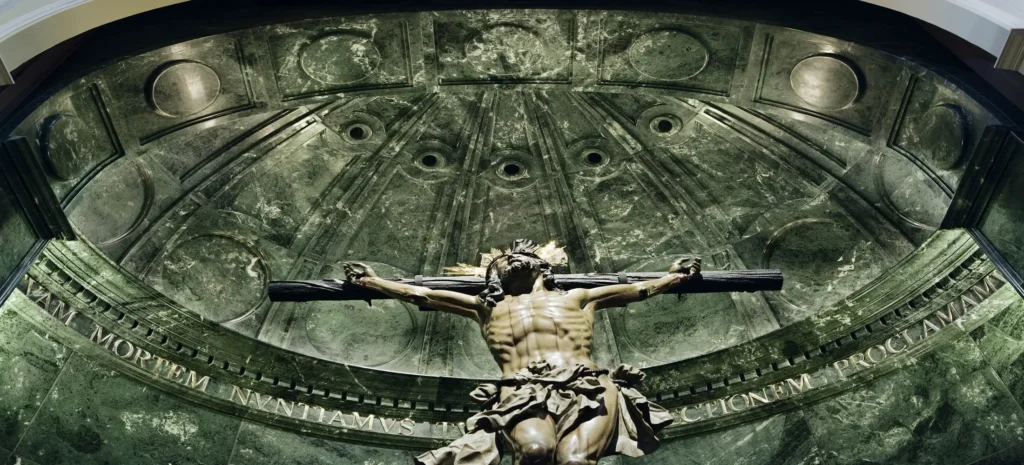
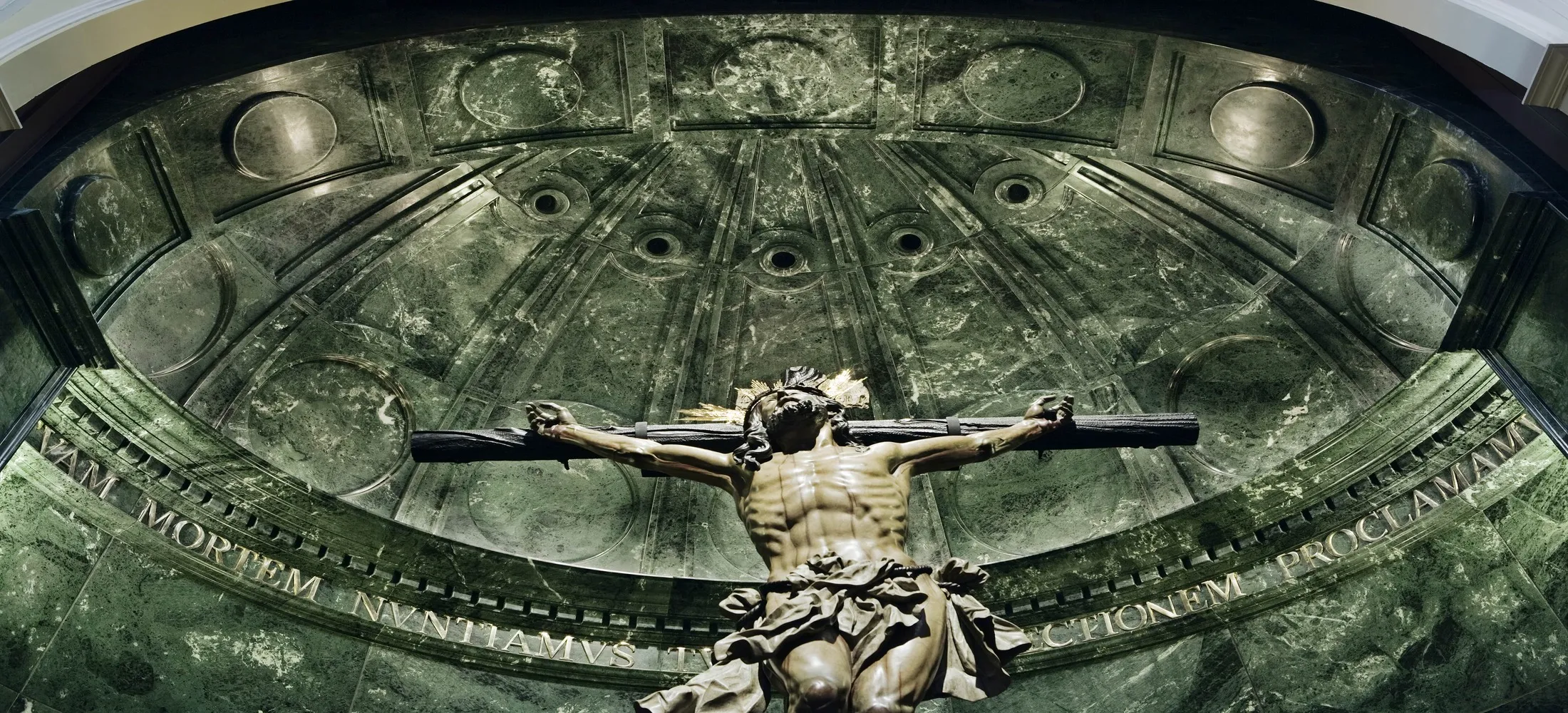
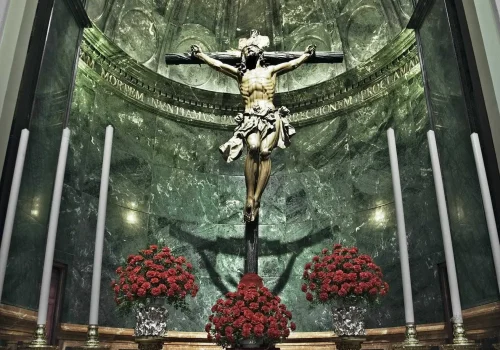
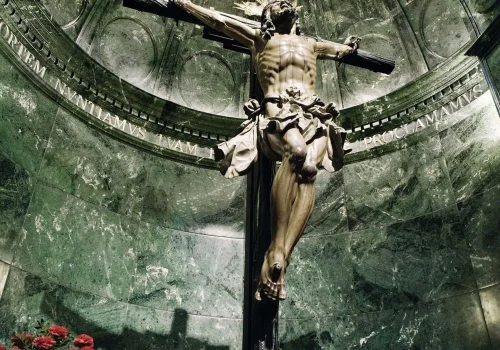
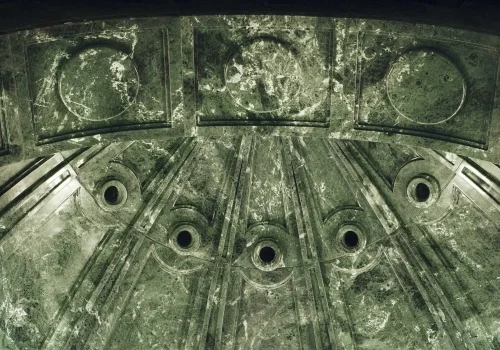
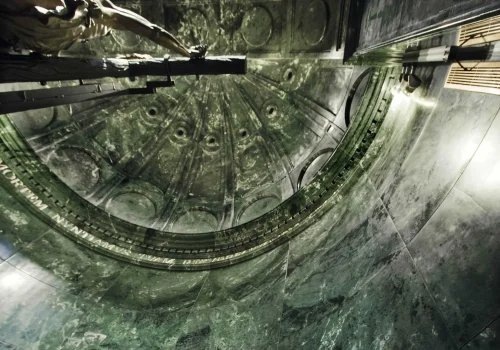
The apse has been designed completely smooth so as not to obstruct the view of Christ. The various pieces that make up the stone cladding are cut and laid out following the curved shape of the altarpiece’s floor plan, adapting to its structural screens. Each slab is over five centimeters thick, so the final view does not create the joints that flat slabs would produce.
Details
Type: Church
Project Name:The Basilica of the Puppy – Seville
Materials:
Indian green marble
Location: Seville, Spain
Category: Religious Art
The Basilica of the Puppy – Seville
Seville, Spain
Project Description:
Covering of the altar of the Most Holy Christ of the Expiration commissioned by the Pontifical, Royal and Illustrious Brotherhood and Confraternity of Nazarenes of the Most Holy Christ of the Expiration and Our Mother and Lady of Patronage of Triana, Seville.
The apse has been designed completely smooth so as not to obstruct the view of Christ. The various pieces that make up the stone cladding are cut and laid out following the curved shape of the altarpiece’s floor plan, adapting to its structural screens. Each slab is over five centimeters thick, so the final view does not create the joints that flat slabs would produce.
Type: Church
Concept:
Details
Project Name:The Basilica of the Puppy – Seville
Materials:
Indian green marble
Location: Seville, Spain
Category: Religious Art
The Basilica of the Puppy – Seville
The Basilica of the Puppy – Seville
Category:
Religious Art
Seville, Spain
Description
Covering of the altar of the Most Holy Christ of the Expiration commissioned by the Pontifical, Royal and Illustrious Brotherhood and Confraternity of Nazarenes of the Most Holy Christ of the Expiration and Our Mother and Lady of Patronage of Triana, Seville.
The apse has been designed completely smooth so as not to obstruct the view of Christ. The various pieces that make up the stone cladding are cut and laid out following the curved shape of the altarpiece’s floor plan, adapting to its structural screens. Each slab is over five centimeters thick, so the final view does not create the joints that flat slabs would produce.